
Digital Walls vs Social Media Walls: The Ultimate Comparison Guide
Introduction
Interactive media has taken over all possible industries known to the world, and the corporate sector is one of its primary beneficiaries. Considering the advantages which interactive technology is loaded with, event organisers are rapidly adopting these tools and installations which help to convert passive spectators into active participants.
Two of the leading choices for events are digital walls and social media walls. Both of these installations provide immersive experiences, enabling interaction and engagement from the attendees. While they might sound or look similar, they differ in terms of their functionality and the outcomes they deliver.
Whether to opt for digital event walls or social media walls depends directly on the goal of the event, the organiser must understand the key differences and features to make the right choice, one which aligns with their event. Both installations come with their own set of pros and cons and in order to make an event successful, it’s crucial to study the same.
Exploring Digital Walls for Events
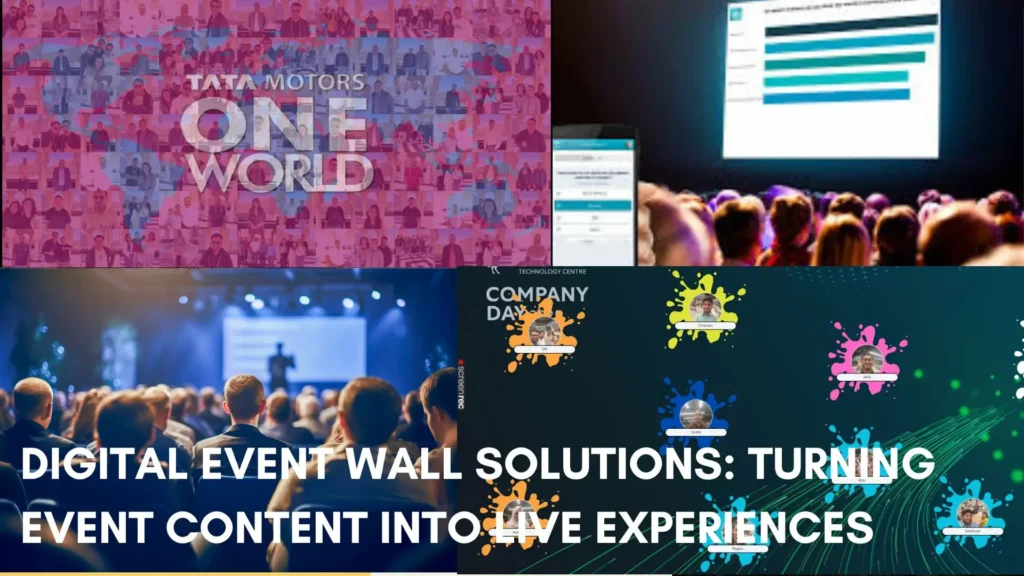
A digital interactive event wall is a powerful tool for corporate events. It piques curiosity and offers space for interaction with the audience. Digital walls don’t merely display content or images, but they encourage users to collaborate through contributions of media such as images and videos in real time.
They are a proven source of active engagement and are equipped with the latest technology for ease of access. Users may participate through easy to understand basic form interfaces or through QRs. They enhance experience through gamification and AI technology. Interestingly, they can be adapted to a number of formats, depending on the needs of the event. A few of these are:
- Photo Mosaic Walls
- Feedback Walls
- Digital Slingshots
- Brand Activation Displays
- Product Launch Displays
- AI Powered Activations
For instance, a photo mosaic wall allows users to upload photographs to form a giant sized image which could be anything from the company logo to a product reveal. Similarly, feedback walls can help display review in real time white display walls can be customised to showcase product launch or brand activation details.
Digital displays have become a high in demand choice for events considering their flexibility. They can be effortlessly customised and branded depending upon the nature of the event. Whether it’s a corporate event, a conference or any marketing campaign, they can be easily used to build and maintain effective engagement and immersive experiences.
The Rise of Social Media Walls
The world has gone online and nothing today exists without social media. Social media has become an active and unavoidable aspect of marketing, and it’s only evident why social media walls are emerging as an effective way to hype up an event. They’re doing what they do best, building conversations, connections and conversions.
A social media wall is a live display of dynamic user generated content which is sourced directly from their social platforms such as Instagram, Facebook, X and Linkedin using hashtags and keywords, becoming a part of the event, and therefore building an organic connection of the attendees with the brand. This live display of content also encourages others to participate, creating a consistent engaging system while also generating social proof which directly benefits the brand.
Social media walls are a great source of marketing an event, every post shared by the users amplifies the event’s reach beyond the venue. Since these posts also reach the attendees’ network, they also have the potential to gather leads stemming from similar interest groups.
These installations also offer customisations in terms of branding, themes and integrations to suit the nature of the event while keeping everything coordinated. From sports events to fests and corporate events, social media walls have proven to be a valuable asset in improving engagement rate of the event and boosting a brand’s online visibility.
Digital Walls vs Social Media Walls
1. The Key Differences
While both digital and social walls might appear similar, they differ objectively. While digital walls are aimed at creating interactive experiences, social media walls are aimed at displaying user generated content. Where one focuses on driving engagement through participation, the other is aimed at amplifying social reach of the brand or the event.
2. Reach & Visibility
Visibility and social media walls go hand in hand. Considering they repurpose user generated content posted on social media, this content is likely to reach more people from their connections and peers, in turn creating brand awareness and possibly arousing interest of more potential leads from a similar network.
Digital walls, on the other hand, focus on impacting the audience present at the event who can directly interact with the brand through image uploads. While their primary focus is the active event, there’s still a possibility of reaching beyond the event, considering these experiences generate content which can be directly shared across social media as well.
Depending on the end goal of the event, an organiser can make a choice that seems wiser. When creating shareable moments is the goal, they may choose digital event walls and if they are seeking extending reach beyond the venue, then social media walls can be a good fit.
3. Audience Engagement
Where digital walls make an appearance, engagement follows. Since they are meant to build a meaningful connection with the attendees while elevating their experience, they’re a much suitable option for events which seek to achieve a good audience engagement rate. There’s a number of ways in which audience can interact with live event walls, few of these are:
- Collaborating on photo mosaic activities while uploading images
- Sharing feedback to be displayed on feedback walls
- Playing interactive games such as digital slingshots on a digital wall
Social media walls, on the other hand, have limitations when it comes to audience engagement. Their only requirement from the audience is posting content which is then displayed in real time. While this is also a good way to garner attention, the engagement usually dies down once the content submission is done.
When the goal of an event is to gain an active engagement level, the experience must also involve activities which require a certain level of interaction which can directly result in longer dwell and engagement rate. This is essentially achieved by event walls which create participation.
4. Branded Experiences
Branding plays a crucial role in awareness and consistency, directly helping users in brand recognition. While both of these installations can integrate branding and customisation, the degree of control may vary.
Digital event walls provide a high level of customisation and flexibility. Brands can integrate their logos, color and typography system as well as their visual design language into the installation. The interactive activities can be customised directly using these branded elements, allowing brands to create experiences which align with their marketing objectives. Whether it’s a photo mosaic revealing their product launch or their logo, a digital wall itself can act as a branding material.
Customisations are available for social media walls as well, wherein the brands can customise the wall similarly using the brand logo, colors and typography as well as the overall content layout. However, it is to be noted that the content remains largely user generated so the brand has little to no say in customising the content to be displayed.
5. Lead Capture
Lead capture is an essential aspect of marketing for brands who wish to focus more on conversions. Both the installations have their own highlights when it comes to garnering attention. While social media walls are great for brand awareness purposes beyond the venue, they are not equipped with a database collection system.
Digital walls, however, can directly integrate forms, QRs and lead magnet systems which can collect user data effectively. Attendees input their data willingly to participate or to collect their prize, resulting in an exchange of data with memorable experiences.
If a brand is looking for measurable business outcomes, then digital event walls provide a much powerful opportunity for capturing leads as well as measuring the ROI.
6. Making the Right Choice
The final decision remains in the hands of the organisers and the choice must be made depending on the objective of the event. For events which are on the lookout to bump up their social media visibility and engagement through user generated content, social media walls are the way to go.
However, if the brand aims to build immersive and memorable experiences while improving participation and engagement rate while also capturing leads, then they can opt for digital event walls. In an ideal case scenario, a brand may combine both to achieve a variety of goals effectively.
While digital walls can help generate natural engagement levels and waves of energy throughout the event, social media walls can help amplify the same online. Together, they make up for a powerful combination which connects the offline and the online world.
Conclusion
Both digital and social media walls have distinct yet important roles to play in the corporate event sector, depending upon the end goal of the event in question. While digital interactive walls focus on engagement and building connections with the brand to capture leads, social media walls help to maximize an event’s reach beyond the offline venue, across various channels.
For brands which are looking to create an online impact through awareness, social media walls are definitely the best choice whereas digital walls provide great value when a brand’s priority is to create experiences which generate leads and create conversions.
A combination of the two can create an experience of a lifetime which generates offline engagement while also driving a high level of reach online, and potentially going viral too.